Wednesday, 24 November 2021

Loupscaroux!

Dear parents,

It was a pleasure to speak with all of you last week. Thanks for taking the time out of your busy schedules and for being such a positive influence on your learners. It's been clear to me since day one that these students love to learn, and that's thanks to you being so involved and interested in what they are doing at school. It makes my job so easy, and I don't take that for granted. Merci!

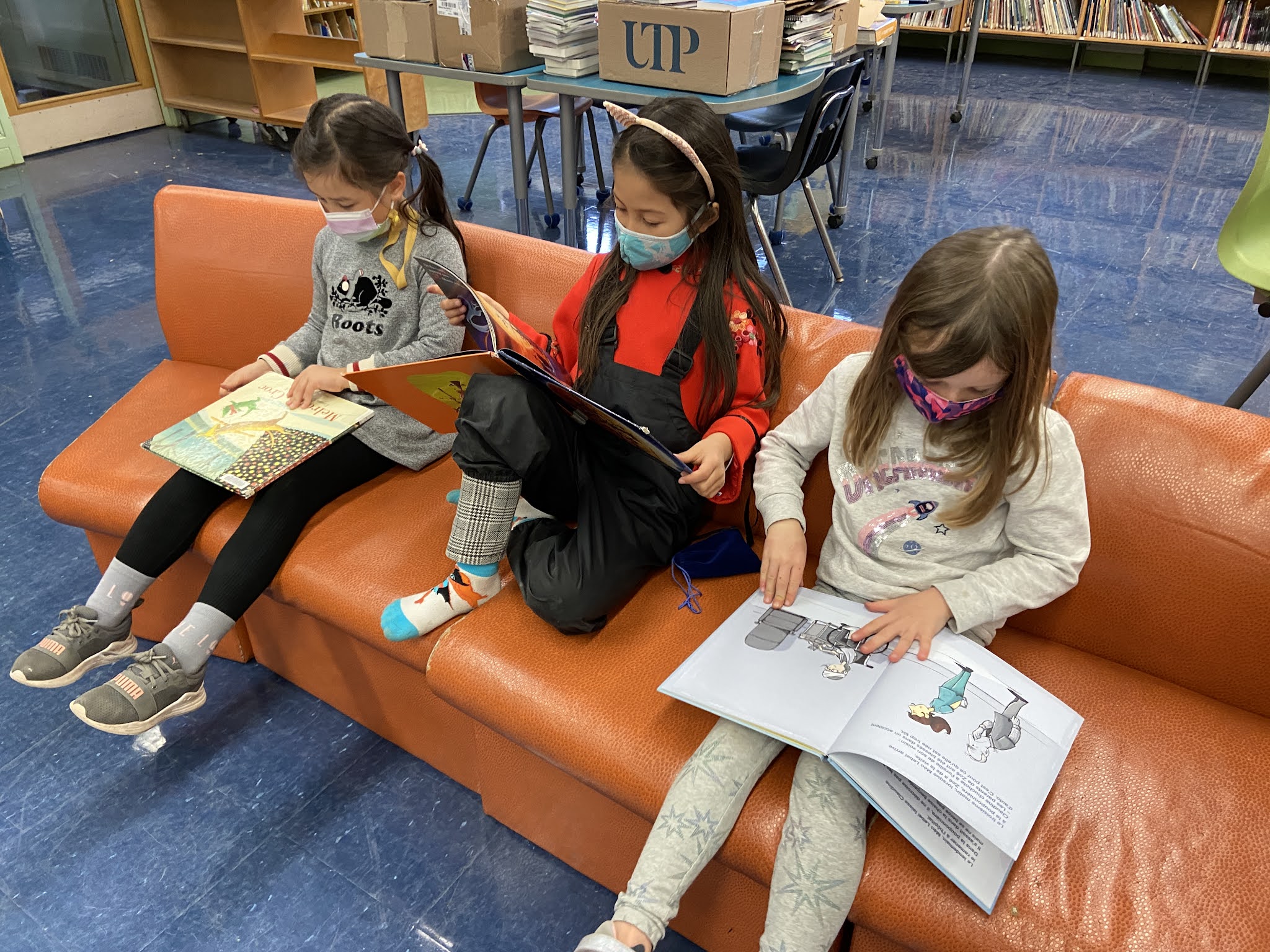
The school "days" have changed with Friday's PA day, so day 4 now falls on Thursday. Please remind your reader to bring back their library book on Thursdays so that they may sign out a new one.
In language this week, we will continue with our independent sounding out of our class poems. We will continue adding to our poem "menu" all year, but we know at least 16 already and students have started leading them in front of the class, with very little help from me! As I may have explained before, when we are sounding out, we are trying to listen to each word in slow motion and get as many sounds as we can down onto paper - but we don't care if spelling is perfect. I want all of our writers to feel confident and successful, and anyway, there are plenty of sounds we have yet to learn! 

Shortly, I will send home an old project - the story we wrote about a fun trip or visit. I thought you might also like to see the rubric that I used to help outline my goals for this project. I haven't taught the class to read a rubric yet, but we discussed these look-fors in class. When reading a rubric, level 3 means that students are meeting expectations - a very good place to be. Level 4 means exceeding (excellent work) and level 2 means approaching expectations (maybe the student needed some extra help with that skill). There is a level 1 as well, which means that a lot of support is needed. I didn't anticipate needing a level one for this project, so I didn't even put it on the rubric. Everyone in our class should be very proud of their work. It's been a while since we presented them, but you can try having your student read it to you, as they did in class!

With our class book about "Le Petit Garçon et la Cacahuète" assembled and on the bookshelf, we've moved on to retelling another oral story. This one is called "Loupscaroux". Hopefully your listener has told you about it - we've noticed it's quite similar to Little Red Riding Hood. Yesterday for art, we did an amazing job working together to cut the scenery and characters out of felt, adding tons of detail, and putting it together to create a whole storyboard, with pictures that can move around! We've already used it to retell the story, and we laughed when the petite fille kept falling down when she was holding her heavy flowers!


In math, we have continued working on completing and creating growing and shrinking patterns. We are always able to guess the growing or shrinking rule and are working on how to define it properly, first stating where the pattern starts, and then how to continue it (e.g., Commence par 1 et ajoute 2 chaque fois.). We are enjoying working with our partners to build these patterns using connecting cubes.

In Social Studies, we have talked about rules and responsibilities in our homes, our school and the community. We have also discussed big changes in our lives, and how we show respect through words and actions. Next, we will be talking about jobs that people have and how they help our community, plus a little project on what we want to be when we grow up.

Mots de la Semaine

Here’s where you get to use your true English  ‘u’ sound. It’s much rounder than plain ‘u’ in French. When you see ‘ou’ in French, think “dude” or “food” in English. 

Some ideas for mixing it up this week:

  1. “ou” means “or”. Ask your child lots of questions involving a choice using “ou” this week. E.g., “Est-ce que tu veux du lait ou du jus?” (Would you like milk or juice?)

  2. It is very common to have silent letters on the ends of French words, and this is something your child has already started to notice at school. Ask your expert to hunt for the silent letters in this, and previous, word lists. (It’s the p on “loup” and the s on “sous”.)

  3. Last week we had the word “sur” (=on top of) and this week we have “sous” (=under).  There’s a cute little song to the tune of London Bridge that begins with these two words. Ask your singer if he/she can sing it for you.

ou, sous, loup, rouge, bonjour

Bonus words: jour, pour

Tuesday, 16 November 2021

Interviews!

Dear parents,
Tomorrow, Wednesday the 17th, you will receive your child's progress report card. I will be talking to our class about what this report means. I will emphasize that it's me sharing my thoughts about how we're doing with listening, participating, trying our best, following instructions etc. These learning skills are much more important to me than whether we have mastered any books because they keep us safe and happy at school, and I know help us learn the other stuff. I will also be explaining that report cards are for reading at home with our parents, not at school with our friends. Everyone is doing lots of things really well, and it never feels good to compare. I hope you enjoy reading the report over with your child. Please celebrate all the great things they have accomplished, and then pick just ONE learning skills goal that we can work even harder on going forward. We will be talking about goal setting early next week.

Wednesday is also a day 4 - library day, so please remind students to bring their book back!

Thursday evening and Friday morning, we are having interviews. Many of you have already selected a time slot through the online booking system. You should have received information about this from the office, so please book your time if you have not already. In addition, if you were hoping to meet or talk to our outdoor ed. teacher, Mr. Lee, please email me and I can see if he can join us.
I didn't want to feel rushed or get behind, so you'll see I have allowed 20 minutes, rather than the default 10, for each interview, but we will keep our chat to 15 minutes in case I need to run to the phone or struggle with zoom for the next interview! If we are doing a zoom, you will receive a link ahead of time.
Last Thursday we celebrated Remembrance Day. Mr. Edgar and Mme Gallo made special announcements and led us in a moment of reflection. Our class wore our handmade coquelicots and listened beautifully to everything. We listened to each other's stories, and I shared more of my grandpa's stories. Our class was very sensitive to the fact that it was my first Remembrance day since he passed and they were very comforting. I told them that he would have been very proud of them on this day.

Our next art project, which we've just finished, is a field of poppies, in the style of Monet. We looked at a book of his work and learned a bit about his style - how he liked to capture light and movement in his paintings - not draw outlines and colour them in perfectly. We tried to keep his style in mind, and we learned to make the far away poppies smaller to create perspective in our paintings. Ask your artist to explain the steps for making these beautiful paintings.


We've continued with our patterning in math, using different materials to try different things. With the pattern blocks we were able to create repeating patterns using 2 or even 3 attributes - colour, shape and even size. We have created people patterns, sound patterns, we have been looking for patterns around us in class and outside, and we are working on number patterns, including growing and shrinking patterns. Today, we learned how to explain the rule for a growing pattern. We need to say two things: where we begin, and what we have to do. For example, "Commence par 1 et ajoute 1 chaque fois." Perhaps if you give your mathematician these instructions slowly, they would be able to build you this growing pattern out of Lego!

In language, something exciting has happened. We have started sounding out! Now that we know SO many poems by heart, I challenged students to try writing one (or more) down in their journal without copying from the board. I modeled what this might look like - saying each word slowly and writing down each sound I hear, without worrying if it's exactly right. For example, "ronde" might come out as just "rod" or "ron", "deux" might come out as "de", "comme" might start with a 'k'. It's all great and I love that we are trying. Everyone persevered with this on our first try and did an amazing job! Bravo! Some students noticed that our word wall, and posters around the room, contain words that are in our poems and can help us with writing. We took some time to brainstorm even more words that we use a lot, or that we found hard to sound out, and added them to the wall for next time.

Our class story, "Le Petit Garçon et la Cacahuète" is almost done and is assembled enough that we were able to read it today! We LOVED seeing our own work put together in a book, and the kids congratulated each author after every page!

This week we are reviewing the final basic vowel sound, ‘u’. The sound doesn’t really exist in English. It is tighter and more nasal than what we know, you kind of need fish lips for this one. Think “few”. A cool trick you can try is to shape your lips for a nice round o, and then in that space, try to say “ee”. You will end up with the right sound. That said, the best way to learn this one is probably just to ask your child to say the word “lune” - show them a picture of the moon and they’ll probably know the word, and they’ll naturally say it correctly. They’ll enjoy being able to teach you something too! 

une, lune, tu, sur, mur

Bonus words: tutu, un*

Note: “un” does NOT contain the ‘u’ sound. It sounds a bit like the beginning of the word “under”, without closing to the ‘n’. It is the masculine version of “une”, and a word we use all day, every day..

Talk to you Thursday or Friday,

Tamara

Tuesday, 9 November 2021

Scholastic

Scholastic is a great source for books and resources for all ages, and I love it because they have a large French catalogue. In addition, if you use our class code, we sometimes receive free gift books for our class, or bonus dollars that I can spend to buy books for our class. You may also qualify for free shipping using our class code.

If you would like to purchase books for your home library (or holiday gifts!), here is how it works:

1. Visit the link - my link takes you directly to the French section, but you can navigate around.
2. Browse and place any desired items in your cart.
3. When you are ready to check out, you will be prompted to set up an account.
4. When you are prompted, please use our Class Code:  RC184887
5. Follow the instructions for payment etc.
6. Scholastic ships fairly quickly, I have usually received books within a week or two.

I encourage involving our students in selecting some books that they are interested in, as this will get them motivated to read. At the same time, it's important to select some books that we know will be at their comfortable reading level. Using my link, you will see a section called "Sight Words". Here, you will find sets of short books that are very much like our RAZ-kids books - simple vocabulary, not too many words per page. These will help us become confident readers! Best of all, they are just over $1/book! 

I hope this is a useful resource for you. Bonne Lecture!